Why combine admission with fixed value coupons
Issuing an entry ticket alongside fixed value coupons guarantees early revenue and streamlines the guest experience. When attendees pre-purchase their food and drink vouchers at the door or before the event, they spend less time queuing at individual vendor stalls to pay. This approach removes the need for volunteers or temporary staff to manage complex cash transactions during peak periods. Your team can focus entirely on serving food and drinks quickly, which keeps queues moving and guests satisfied.
Choosing the right value levels for food and drinks
Selecting practical monetary values for your physical coupons ensures the system feels fair to guests and remains simple for your staff. When you choose the correct pricing increments, you avoid confusing attendees at the point of purchase. This careful planning makes the entire transaction process smoother for everyone involved.
Setting practical coupon values
The face value of your coupons must align closely with the actual prices of the items you offer. Assigning a standard round number to each coupon makes it easy for guests to understand their purchasing power. You should avoid awkward pricing gaps that force attendees to buy more coupons than they actually need to complete a simple order.
Matching denominations to popular items
Designing your coupon values around the most commonly purchased food and drink options speeds up the redemption process. If a standard drink costs a specific amount, create a coupon denomination that matches that price exactly. This direct correlation prevents staff from doing complicated mental arithmetic when calculating the cost of an order.
Managing change and refunds
You must establish clear rules regarding whether staff will issue cash change for unused coupon balances. Many event organisers state clearly on the coupon that no cash change is given, which simplifies operations and encourages guests to spend their full pre-paid amount. If you do allow refunds for unspent coupons at the end of the event, you need a dedicated station to handle those transactions securely.
Designing layouts for easy identification
Physical design elements play a critical role in helping your staff recognise ticket and coupon types instantly at busy service points. When tickets look distinctly different from one another, your volunteers spend less time inspecting them. This visual clarity keeps your queues moving steadily during peak periods.
Using large fonts and clear wording
The text on your coupons must be large enough for staff to read quickly in low light or rushed environments. Clear wording that states the exact value or specific item prevents confusion between different categories. You should keep the layout uncluttered so the most important information stands out immediately upon visual inspection.
Selecting distinct colors for categories
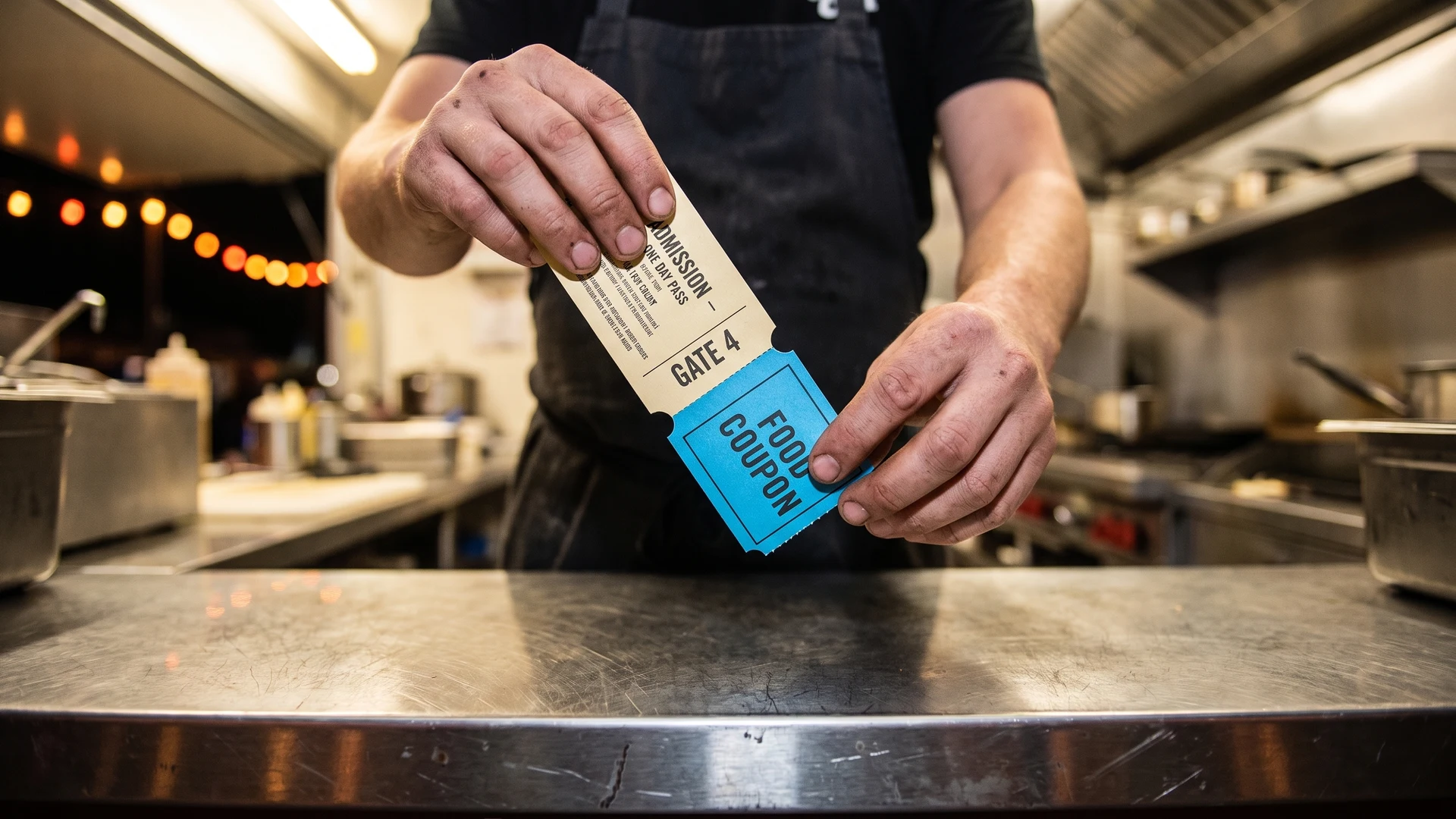
Assigning a distinct colour to each food or drink category helps staff verify the correct value without reading the text every time. A bright blue coupon might represent a soft drink, while a red coupon covers a premium food item. Relying on strong colour contrasts reduces mistakes, although you should always pair colour with clear text to ensure the system works for everyone.
Adding detachable sections for admission
Creating a single ticket with perforated sections allows you to combine entry and food vouchers into one physical item. The main body of the ticket grants admission, while the detachable stubs serve as individual coupons for drinks or meals. Staff can simply tear off the relevant section when the guest claims their item, which keeps the process fast and leaves the guest with their remaining vouchers intact.
Organizing a smooth distribution process
Establishing a sequential flow for issuing bundled tickets at the entrance prevents bottlenecks from forming. A structured handover process ensures that guests receive exactly what they paid for without any unnecessary delays. You can train your temporary staff easily when the steps remain consistent for every single visitor.
- Prepare your station: Arrange your physical tickets, coupons, and cash floats logically before the doors open. This preparation means staff do not have to search for items while guests wait. A tidy workspace is essential for maintaining a fast and accurate service.
- Verify the purchase: Confirm the payment or pre-booking details quickly with the attendee. This step determines the exact bundle of admission and value coupons they require. Accurate verification prevents costly mistakes at the very beginning of the guest journey.
- Issue the items: Hand the complete set of tickets and coupons directly to the guest. You should briefly explain what each specific colour or section represents as you hand them over. This quick communication reduces confusion when they arrive at the food stalls.
- Secure the payment: Place the collected cash or card receipt directly into the till before serving the next person. Finishing the transaction completely protects your revenue and maintains accurate financial records. Rushing this final step often leads to discrepancies during the evening.
Using sequential numbering to track usage
Sequential numbering gives every physical ticket a unique, consecutive number within a defined series. This incremental system provides a clear paper trail that makes inventory control and auditing straightforward for your team. Organisers can easily see how many tickets they started with and how many remain simply by checking the first and last numbers on a printed roll or book. Assigning specific number ranges to individual sellers creates clear accountability and helps you track exactly who holds which stock.
This numbering strategy also acts as a robust security measure against counterfeit items and internal discrepancies. Unique, ordered numbers prevent the introduction of fake tickets because every valid entry must follow the strict numerical sequence printed for the event. If numbers are missing from a chronological batch, your management team can instantly spot the gap and investigate the loss. Matching the sold ticket stubs against the returned unsold stock lets you reconcile the cash collected with the total sales quickly and accurately.
Keeping queues moving during redemption
Establishing clear rules for receiving and storing physical coupons at your food and drink stations helps your team serve guests faster. A standardised redemption method removes uncertainty for volunteers working under pressure. Consistent handling also protects your event from accidental reuse or lost revenue.
- Take the coupon first: Train your staff to physically receive the coupon from the guest immediately. They must secure the payment before they begin preparing the food or pouring the drink. This sequence ensures that nobody walks away with items they have not paid for.
- Verify the details: Check the colour, printed value, and any sequential numbers quickly upon receipt. This brief inspection ensures the submitted item matches the specific product requested by the attendee. Catching a mistake here prevents inventory losses and keeps stock levels accurate.
- Tear or deface the item: Destroy the coupon slightly by tearing it in half or marking it with a pen. This physical alteration prevents the guest or anyone else from attempting to use it a second time. It is a simple but highly effective way to stop casual fraud.
- Store securely: Place the redeemed coupon immediately into a closed collection box or till drawer. The items must remain safe and contained until they are needed for counting at the end of the shift. Loose tickets left on counters are easily lost or swept away.
Reconciling collected coupons after your event
Reconciling physical coupons after your event involves counting the collected items and matching them against your recorded sales data. You start by gathering all the coupon stubs from the collection boxes, flattening them out, and sorting them by category or cash value. Your team must count the physical items by hand, often grouping them into stacks of fifty or one hundred to avoid counting errors. Once you have a precise count, you multiply the total number of redeemed coupons by their face value to calculate the gross revenue they represent.
Matching these redeemed coupons against your issued stock and Point of Sale (POS) data verifies the overall accuracy of your operation. This internal control process ensures that the physical inventory leaving your stalls aligns perfectly with the discounts or sales recorded at the till. If your physical count does not match your computer report, this variance highlights potential issues like misplaced items or unauthorized giveaways. Gathering this reliable data helps you measure the true financial success of your fixed value coupon strategy.
Planning your complete ticket and coupon system
Designing a successful physical ticketing system requires careful thought about layouts, denominations, and operational workflows. When you map out the entire lifecycle of your tickets from the entrance to the final reconciliation, you build a process that supports your staff and delights your guests. Coupon Tickets provides practical guides and educational resources to help you structure these physical systems effectively. By applying this objective knowledge to your own facility, you can confidently implement a ticket strategy that perfectly suits the specific demands of your venue.
How should I set coupon values to encourage spending without causing change issues?
Choose whole-number values that match your menu pricing to reduce change handling and speed queues. Pick one base value and a higher tier to encourage upgrades. Decide your policy on giving change or allowing top-ups. Share a simple conversion chart so staff apply values consistently.
What is a practical way to package coupons with the event ticket at entry?
Use an event ticket with two or three perforated fixed-value stubs printed on the same sheet. Issue one set per guest, log the starting and ending numbers, then vendors tear and retain stubs at redemption. This keeps distribution, redemption, and reconciliation simple.
How does sequential numbering improve issuing, tracking, and loss prevention?
Sequential numbering gives each ticket or coupon a unique increasing number, creating a clear paper trail. Assign ranges to sellers, compare start and end numbers to units issued, and flag gaps that signal loss or misuse. Lost ranges can be recorded and refused at redemption.
Which layout choices make coupons easy to recognise and redeem during busy service?
Use big, high-contrast value text, clear wording like Food 10, and distinct colours per category supported by the text. Keep one tear line per stub and place the number in the retained part. Group stubs in a predictable order so staff grab the right one quickly.
What steps should we follow to reconcile redeemed coupons after the event?
Collect all retained stubs, sort by type, and count in consistent bundles. Inspect for duplicates or expired dates. Compare physical counts with point of sale reports, calculate totals by count times value, record any variance, then label and store bundles securely for audit.