Why ticket size and paper strength matter for your venue
Every physical ticket must survive a journey from the sales point to the guest and finally to the staff member who collects it. When you choose materials without considering this lifecycle, you risk slowing down your service with torn paper or cumbersome handling. Admission passes, cloakroom tags, and food redemption coupons each face different physical demands throughout an event. Evaluating size and material strength ensures your team can distribute and verify tickets quickly.
A ticket that works perfectly at an indoor school fair might fail completely during a rainy outdoor festival. Flimsy paper slows down entry lines when staff struggle to separate perforated sections. Oversized tickets can frustrate guests who cannot fit them easily into a pocket or wallet. Selecting appropriate dimensions and durable paper keeps your event running efficiently and creates a better experience for everyone involved.
Finding the right ticket dimensions for different situations
The physical size of a ticket dictates how easily your team can handle it during a fast-paced shift. You need to balance the need for clear information with the practical realities of cash drawers and guest pockets. Evaluating your operational constraints helps you select dimensions that support your specific event workflow.
Storage space at sales points
Your staff need a tidy and secure way to store tickets before they issue them to guests. Large tickets take up valuable space on crowded sales desks and may not fit into standard cash drawer compartments. If your team has to leave ticket rolls or stacks scattered across a table, they risk misplacing them or slowing down transactions. Choosing a compact size allows cashiers to organize different ticket types neatly and serve guests much faster.
Readability and space for marking
While compact tickets save space, they must still provide enough room for clear wording and sequential numbering. Sequential numbering gives every ticket a unique number within a defined series, which helps your team track issuance and reconcile usage later. If staff need to punch a hole or mark the paper with a pen, a tiny ticket becomes difficult to manage. You must ensure the chosen dimensions offer sufficient blank space for these validation methods without obscuring important printed details.
Convenience for guests carrying tickets
Guests often carry tickets for several hours before redeeming them for food, drinks, or cloakroom items. If you issue large or awkwardly shaped cards, visitors may fold or cram them into small spaces. This folding can damage important text or make the paper difficult for staff to collect later. Standardizing on a pocket-sized format encourages guests to keep their tickets safe and intact until they reach the redemption point.
Choosing durable paper for outdoor events and long shifts
Environmental conditions and prolonged handling put severe stress on physical tickets. You must select paper weights and materials that match the demands of your specific venue. Understanding how different paper types react to moisture and friction helps you avoid operational failures.
Resisting moisture at outdoor events
Outdoor events expose tickets to high humidity and rain, which can destroy thin paper very quickly. Heavyweight paper absorbs moisture much slower than lightweight paper, which helps the ticket remain rigid and functional in damp conditions. However, paper weight alone does not make a ticket completely waterproof. For genuine moisture resistance, you should choose heavy stock paired with a protective coating or opt for synthetic paper made from plastic resins.
Surviving friction in pockets and bags
Guests repeatedly handle their tickets and slide them in and out of pockets, which creates friction that wears down the material. High ambient humidity or sweat from hands softens the cellulose fibers in paper, sharply lowering its resistance to abrasion. Thicker paper with high density resists structural break-through and tearing much better under this constant friction. Adding protective polymer coatings seals the surface to prevent ink smudging and surface fiber wear.
Tearing smoothly along perforations
Many event coupons require staff to tear away a stub quickly to grant admission or redeem an item. Paper thickness and perforation density together determine how cleanly and easily the coupon separates along the designated line. Thicker paper increases structural resistance, meaning it requires higher perforation density to create a smooth edge and prevent jagged rips. You must match the perforation strength to the paper weight so that tickets detach perfectly without falling apart prematurely in a pocket.
Paper requirements for effective cloakroom management
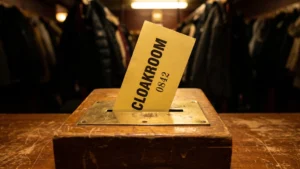
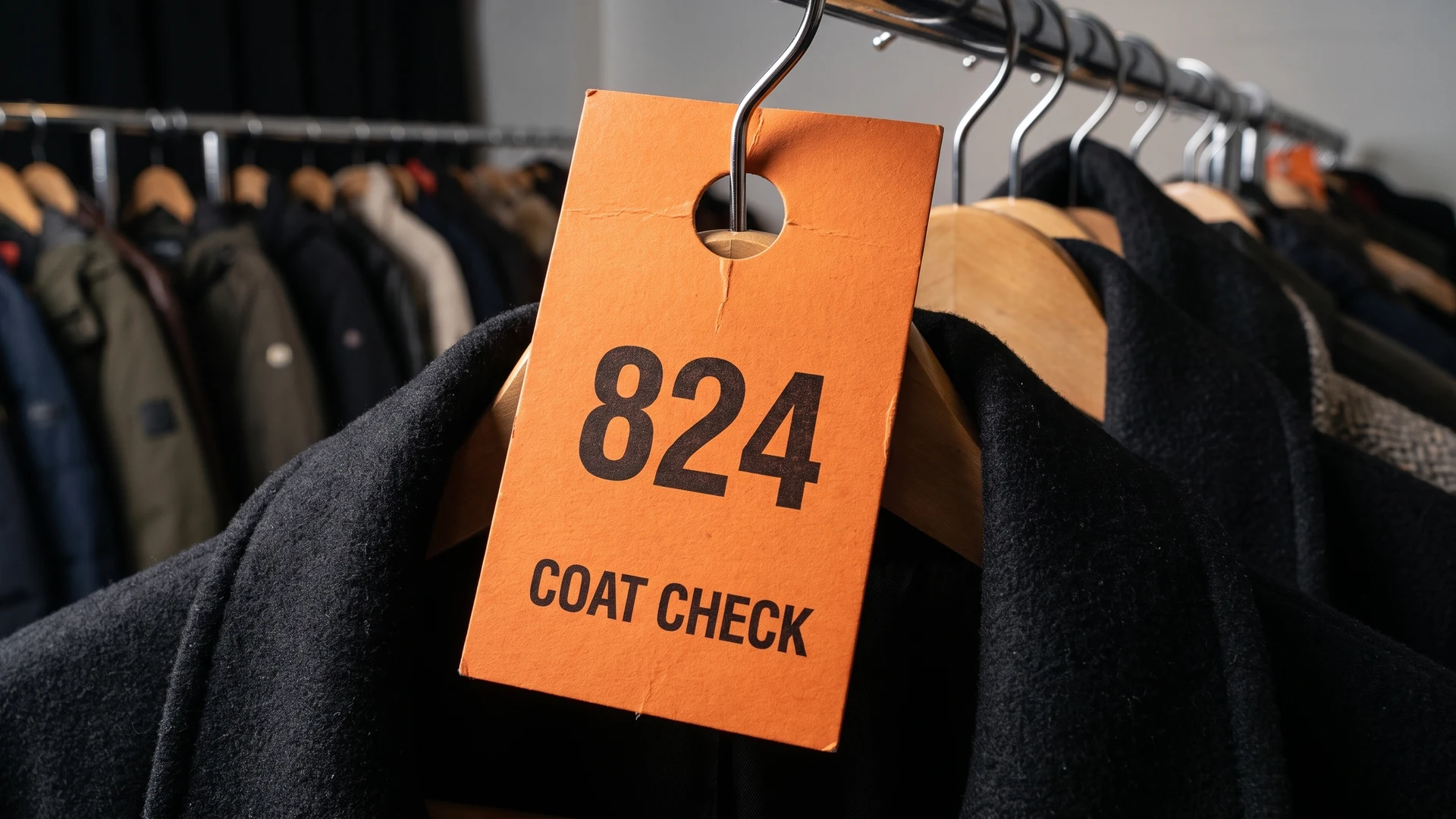
A cloakroom is a high-pressure environment where staff handle heavy coats and bags rapidly. Cloakroom tickets normally need a thick material because one section must attach securely to a hanger or handle without ripping. If you use flimsy paper, the weight of the items or the friction of a busy rail will quickly tear the ticket away. Losing the attached number creates massive delays when guests return to collect their belongings at the end of the night.
The size of a cloakroom ticket also plays a critical role in keeping queues moving steadily. Staff need large, clear numbers that they can spot easily in a dimly lit cloakroom space. A well-sized, durable ticket allows your team to match the guest’s stub with the stored item in seconds. Investing in sturdy materials directly supports faster service, reduces mistakes, and gives your visitors confidence that their property is safe.
Steps to evaluate food and drink coupons before ordering
Food and drink stands require a rapid exchange of value to serve long lines of hungry guests. If you order the wrong coupon format, you risk confusing staff and slowing down the entire service process. Following a logical evaluation method helps you finalize physical specifications that work perfectly during busy periods.
- Map the workflow: Map out exactly how guests will purchase and redeem their coupons at the event. You must determine if cashiers will tear coupons from a large roll or hand out individual slips from a drawer. This early planning dictates whether you need perforations or loose tickets for your food stands.
- Select a distinct color scheme: Choose different colors for different values or items to help staff recognize the correct coupon instantly. You can assign a specific color to a meal and another to a drink, which speeds up visual identification in low light. Color should not be the only indicator, but it provides a strong primary cue for fast-paced environments.
- Determine the required durability: Assess the environment where the coupons will be held and exchanged by guests. If attendees will carry food tickets around an outdoor festival all day, you need a heavier paper weight to prevent them from disintegrating in sweaty hands. Indoor events with shorter durations can often use a standard paper stock without issue.
- Test the handling size: Cut a piece of paper to your proposed dimensions and practice handling it like a real transaction. You need to ensure the slip is large enough to hand over easily but small enough to fit inside a standard cash till compartment. Testing the physical shape prevents you from ordering coupons that are awkward for your team to process.
Finalizing your physical ticket strategy
Planning your ticket materials in advance ensures your team can handle admission, cloakrooms, and food sales with complete confidence. You should always evaluate the physical demands of your specific venue before committing to a final size or paper weight. Coupon Tickets provides objective guides to help you build reliable physical ticketing systems for any event. If you need further educational resources on planning your process, you can reach out to contact@coupontickets.com for practical guidance.
How do I choose a ticket size that staff can read quickly?
Pick the size by the viewing distance and the details you need to see first. Make the ticket type and number large, and leave a clear area for a stamp or hole punch. Check that the ticket fits trays, clipboards, or apron pockets before you commit.
What paper weight works best for outdoor or high humidity use?
Use heavy paper of 200 grams per square meter or more for rigidity in damp conditions, but weight alone is not waterproof. Add an aqueous coating, a water-based protective finish, or an ultraviolet cured coating. For maximum water and tear resistance, consider synthetic paper or lamination, a thin plastic layer.
How do I keep barcodes or Quick Response codes readable in wet weather?
Protect machine-readable areas by reducing warping. Choose heavier stock to resist wrinkling when damp, and add a coating or lamination to limit moisture absorption. Place the barcode or Quick Response code QR code on a flat area away from edges and perforations to keep scanning reliable.
How do I set perforations so stubs tear cleanly?
Match perforation strength to the paper thickness. Thicker stocks need larger cuts or closer spacing to guide the tear, while very dense perforations on thick paper can detach too easily. Test several cut to tie ratios on your chosen stock to balance cleanliness and security.
How can I keep handheld tickets durable during long shifts and pocket carry?
Choose heavier paper with strong fibers and a protective coating to resist rubbing and sweat. Ask for wet strength additives, chemicals that help paper hold together when damp, if moisture is likely. Store stacks in covered dispensers and avoid crushing pressure that creates creases.