Creating a unified ticket system for your event
Coordinating your physical tickets gives your staff a clear structure to follow from the moment guests arrive until the final reconciliation. When you align your admission slips, cloakroom tags, and food coupons, you prevent the delays that occur when team members have to pause and decipher mismatched formats. A unified approach means every piece of paper follows predictable rules for size, colour, and numbering. This consistency allows volunteers and permanent staff to process guests quickly and maintain control over the entire venue.
Assessing your different ticket types and their functions
Before you choose your formats, map out exactly how your team will use each physical ticket throughout the venue. Different areas place distinct demands on tickets, and understanding these functions helps you select the right features for each category. While the system should feel cohesive, you must respect the unique operational requirements of every transaction point. Identifying these distinct roles prevents you from forcing a single ticket design into tasks it cannot handle.
Admission tickets for entry control
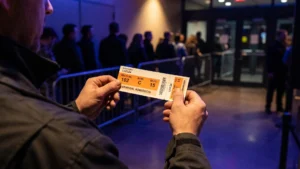
Your entry tickets serve as the first point of control and must clearly show that a guest has the right to access the event. Staff need to verify these items quickly at the door, often tearing a perforated section (a line of tiny holes that makes paper easy to tear) to invalidate the ticket and prevent reuse. A straightforward layout ensures your door team can process arrivals rapidly and keep the main entrance clear.
Cloakroom tickets for matching items
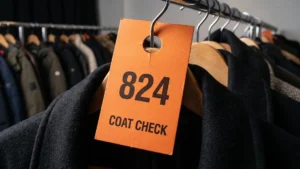
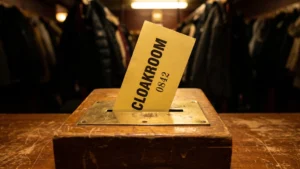
A secure cloakroom relies on a two-part matching system to connect guests with their stored coats and bags. The cloakroom ticket must feature a duplicate number, allowing the attendant to attach one half to the hanger and hand the matching half to the visitor. When the guest returns to collect their belongings, your staff can easily read the sequential number to locate the correct item without confusion.
Value coupons for food and drinks
Value coupons act as a physical currency within your event space, allowing guests to exchange them for specific products. Your catering team needs to identify the value or item associated with the coupon instantly, especially in dimly lit environments or during peak service times. Distinct markings for different items help staff serve refreshments accurately and prevent disputes over what the guest has paid for.
Coordinating wording and colours for quick recognition
Visual consistency across your ticket system helps staff process transactions rapidly and accurately. By standardising your design choices, you reduce the mental effort required for volunteers to identify what each guest is handing them. Planning these visual cues across all departments ensures no two ticket types look deceptively similar.
Assigning colours to specific categories
You can assign a different ticket colour to each function, which helps staff recognise the correct purpose quickly during busy periods. For example, using blue for admission, green for cloakrooms, and yellow for drinks creates an immediate visual sorting system. This clear separation stops attendees from accidentally handing a drink coupon to the cloakroom attendant and slows down the queue.
Standardising wording across all formats
Clear and predictable text prevents misinterpretation when staff handle unfamiliar ticket categories. You should use the same font size and placement for critical information like the value, date, or item description across all your printed materials. When volunteers know exactly where to look for the relevant details, they can validate the ticket confidently and keep the service flowing smoothly.
Aligning physical sizes for easy handling
Choosing compatible dimensions for all your physical tickets makes it easier for your team to store, issue, and collect them. If your admission tickets are massive and your drink coupons are tiny, your staff will struggle to organise their cash boxes and collection bins. Standardising the size or using modular dimensions ensures everything fits neatly into standard dispensers and aprons.
Consistent sizing also improves the experience for your guests as they move through the venue. Visitors are less likely to lose their coupons if all the pieces fit comfortably into a standard wallet or pocket. Providing a physically uniform set of tickets reduces frustration and helps everyone keep track of their purchases throughout the event.
Setting up a continuous numbering system
Applying sequential numbering (a continuous series of numbers printed in order) gives you an objective way to track ticket issuance and usage. A logical numbering structure allows your procurement lead to maintain security and monitor exactly how many items leave the box office. You can establish this control by following a straightforward sequence of tasks before the doors open.
- Define individual series: Assign a unique numerical range or a specific letter prefix to each ticket category. This separation ensures you never confuse an admission number with a cloakroom tag during your final counts. Establishing distinct series for different areas keeps your data clean and easy to read.
- Record starting figures: Document the first number on the roll or block before you hand it over to a staff member. Writing this down gives you a reliable baseline to calculate total sales and distribute floats accurately. Without this initial record, your team will struggle to verify their performance at the end of the shift.
- Monitor issuing points: Instruct your team to hand out tickets strictly in numerical order without skipping any in the sequence. Consistent distribution guarantees that your ending numbers accurately reflect the volume of guests processed. If a roll gets dropped or jumbled, staff must quickly reorganise it to maintain the integrity of the count.
Training staff to apply consistent rules
A unified ticket system simplifies the briefing process for temporary staff and volunteers. When all tickets share a logical design, you can provide clear instructions on how to check colours, read numbers, and tear perforations. Your team will feel more confident handling different transactions because the underlying rules remain the same across the venue. This clarity significantly reduces mistakes at the door and the bar, ensuring guests receive fast and accurate service.
Reconciling issued and collected tickets
Closing out your event requires a systematic approach to counting the tickets that were issued, collected, and left unused. A coordinated system makes this reconciliation much easier because every physical piece has a defined place in your records. You can verify your event data by following these steps at the end of the day.
- Count the remaining stock: Check the final number on every roll or block that your staff return after their shift. Subtracting the starting figure from this final number tells you exactly how many tickets were handed out. This straightforward calculation immediately highlights any discrepancies at the individual service stations.
- Weigh or tally collected stubs: Gather all the torn sections and collected coupons from your entry gates and catering points. You can count these manually or weigh them if you use a standard paper stock, providing a total of items actually redeemed. Comparing the redeemed total against the issued total helps you spot unredeemed value or potential security issues.
- Balance against expected attendance: Review your final ticket numbers against your initial guest estimates and capacity limits. This review shows you which areas experienced the highest demand and helps you plan your logistics more effectively next time. Gathering this objective knowledge ensures you order the correct quantities for future events.
Running a smooth event with clear physical tickets
Implementing a coordinated physical ticket strategy turns a scattered collection of paper slips into a reliable operational tool. When you align your ticket types, colours, sizes, and numbering, you empower your team to work with speed and accuracy. Your visitors benefit from straightforward transactions that keep queues short and prevent frustration at the cloakroom or the bar. With careful planning, you can take complete control of your event logistics and ensure a straightforward experience for everyone involved.
What is the best way to number different ticket types in one system?
Best practice is to give each ticket type its own number series and a prefix. A prefix is a short code printed before the number, such as AD or CL. This prevents collisions, speeds counting, and lets staff log issues by type without confusion.
What wording should I standardise across admission, cloakroom, and coupons?
Use the same structure on every ticket. State a clear title, the action allowed, where to present it, and any limits or dates. Keep one action per ticket. Use consistent phrases like Non transferable and No cash value to avoid mixed interpretations.
How should I use colours without causing confusion?
Assign each ticket type a distinct colour, but never rely on colour alone. Add large text labels and values. Keep contrast high for low light. Limit the palette to what staff can remember. Test samples under your venue lighting and adjust if recognition is slow.
Which sizes and perforations work best for a combined system?
Pick sizes your team can handle quickly and that fit drawers, aprons, or clipboards. Use perforation, a line of small holes for easy tearing, when a detachable stub is needed. A detachable stub is a small section kept for records. Cloakroom tickets often need matching pairs.
How do I reconcile tickets after the event?
Start by recording starting numbers for each series before opening. Afterward, count collected stubs and redeemed coupons by prefix, then compare to issued quantities. Note voids and damaged items. Reconcile tallies by location, investigate gaps, and record lessons to refine the next run.