How physical ticket layout affects your admission process
The physical design of an event ticket plays a major role in how quickly your staff can move guests through the door. When hundreds of people arrive at once, every second your team spends struggling to read details or tear a stub adds up to significant delays. A well-designed ticket anticipates how staff hold the paper and allows them to validate entry in one smooth motion. Designing with human movement in mind reduces the risk of accidental damage and prevents queues from building up unnecessarily.
Organisers who prioritise operational efficiency choose ticket layouts that simplify the physical interaction at the gate. Placing critical information exactly where the eye expects it ensures that checking staff do not have to flip or rotate the paper. A practical approach to ticket design gives your team the confidence they need to handle high volumes of attendees without making mistakes. If you focus on the mechanics of the admission process, you can create a seamless experience for both your visitors and your staff.
Choosing perforation lines for a smooth tearing motion
Selecting the right type of perforation ensures that your staff can tear tickets quickly without destroying important information. The ease of tearing depends heavily on the Teeth Per Inch, which we will abbreviate as TPI, as well as the length of the uncut paper ties between the holes. A higher TPI count like micro-perforation requires minimal force for a clean snap, while a lower TPI count offers more structural strength but demands a deliberate bend and tear. It is also vital to align the perforation parallel to the paper grain direction, as tearing against the grain creates rough edges and increases the chance of accidental rips.
Positioning vertical tears for admission lines
Vertical perforations divide a ticket into a left and right split, which suits wide landscape designs like classic theatre stubs. When staff process a vertical perforation, they typically use a two-handed sideways pull to separate the stub from the main body. This layout helps keep important elements like barcodes safely isolated on one side so they do not cross the tear line. While this tearing motion can be slightly slower than snapping downward, it preserves the integrity of the paper during high-speed printing and fast-paced gate checks.
Using horizontal tears for compact coupon formats
Horizontal perforations work best for tall portrait orientations, such as wristbands or transport passes that split into a top and bottom section. This placement allows checking staff to snap the ticket downward in a single fast motion when holding it vertically. It is an incredibly ergonomic movement that speeds up entry lines significantly when applied to compact formats. However, you must consider the printing process carefully, as horizontal cuts can create structural weak points across paper rolls during manufacturing.
Placing sequential numbers for visible checking
Sequential numbering gives every ticket a unique identifier that your staff must be able to read instantly at the door. If you place these numbers in the corners where team members naturally pinch the paper, their thumbs will cover the vital digits. Positioning the sequence in the clear central areas or along the very top edge ensures the number remains visible regardless of how the ticket is held. This ergonomic placement allows your checking staff to validate authenticity and track series progress without constantly shifting their grip.
When numbers are clearly visible on both the main ticket and the retained stub, your operation becomes much more secure. Staff can quickly cross-reference the sequence at a glance to prevent duplicate entries and monitor venue capacity in real time. A thoughtful numbering layout removes the need to smooth out or turn the paper, saving valuable seconds with every single guest. By treating the ticket as a practical tool rather than just a visual souvenir, you empower your team to maintain complete control over the admission flow.
Organising wording to speed up queue management
The way you arrange text on your ticket directly influences how quickly your staff can process each arrival. Busy team members do not have the time to search through cluttered graphics to find the date, time, or age restrictions. Grouping the most critical details into dedicated zones allows the human eye to find the necessary facts in a fraction of a second. A clear hierarchy of information ensures that your team can keep the queue moving steadily without pausing to decipher poor layouts.
Grouping essential information for the initial check
During the first interaction at the gate, your staff only need to verify a few key pieces of information to grant access. Placing the event date, start time, and venue name in a large bold font at the top of the ticket creates an immediate focal point. You should group any strict conditions like age limits or entry gates in a secondary block just below the main details. This distinct grouping prevents staff from hunting for validation criteria and significantly speeds up the initial verification process.
Managing the text retained on the torn stub
Once the ticket is torn, the retained stub must still carry enough information to prove exactly what was collected. The stub should always feature the sequential number, the specific ticket category, and any relevant seating assignments. Keeping this text concise and legible ensures that the torn piece remains fully identifiable for your administrative records. If you arrange the wording correctly, your team will never have to guess which stub belongs to which guest or event segment.
Establishing a checking and tearing sequence for staff
Providing your staff with a standardised physical process for handling tickets reduces mistakes and keeps the admission line flowing efficiently. Temporary workers and volunteers perform much better when they have simple, concrete instructions for every physical movement. You can use the following standard sequence to train your team on how to process guests smoothly.
- Receive the ticket: Instruct your staff to take the ticket from the guest with their non-dominant hand while keeping their dominant hand ready to tear. This positions the paper correctly for reading without requiring awkward shuffling. A consistent receiving motion establishes a fast rhythm for the entire entry process.
- Verify the details: Staff should glance at the primary information zone to check the date, time, and sequential number. Training your team to look at the exact same spot every time drastically cuts down on verification delays. If the details are correct, they can immediately proceed to the physical separation.
- Tear the stub: The team member must grip the ticket firmly and apply the correct downward or sideways tearing motion along the perforation. Executing a clean tear prevents damage to the paper and ensures the stub separates smoothly. A confident tearing action reflects well on the overall professionalism of your event.
- Return the remainder: Finally, the staff member hands the main body of the ticket back to the guest and securely stores the torn stub. Storing the stub immediately in a dedicated box prevents loss and keeps the workspace tidy. This final step completes the transaction and signals the next guest to step forward.
Adapting ticket design for food and drink redemption
Unlike admission stubs that require careful tearing, food and drink coupons are usually collected whole in high-speed environments. When a busy bartender or food vendor accepts a ticket, they need to identify its value instantly under poor lighting conditions. Relying heavily on distinct colours and large bold values makes it much easier for staff to process these transactions rapidly. Because redemption coupons do not usually require a tear, you can print them on smaller solid cards without worrying about perforations.
Designing for a busy service area means eliminating any unnecessary text that could confuse your team. A drink ticket only needs to state its purpose and value clearly so that staff can drop it into a collection box and serve the guest immediately. You can assign a different ticket colour to each food or drink category, which helps staff recognise the correct item quickly during busy periods. Simplifying the layout of these redemption items ensures that your catering queues move just as efficiently as your front doors.
Matching cloakroom tickets with stored items securely
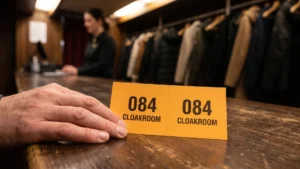
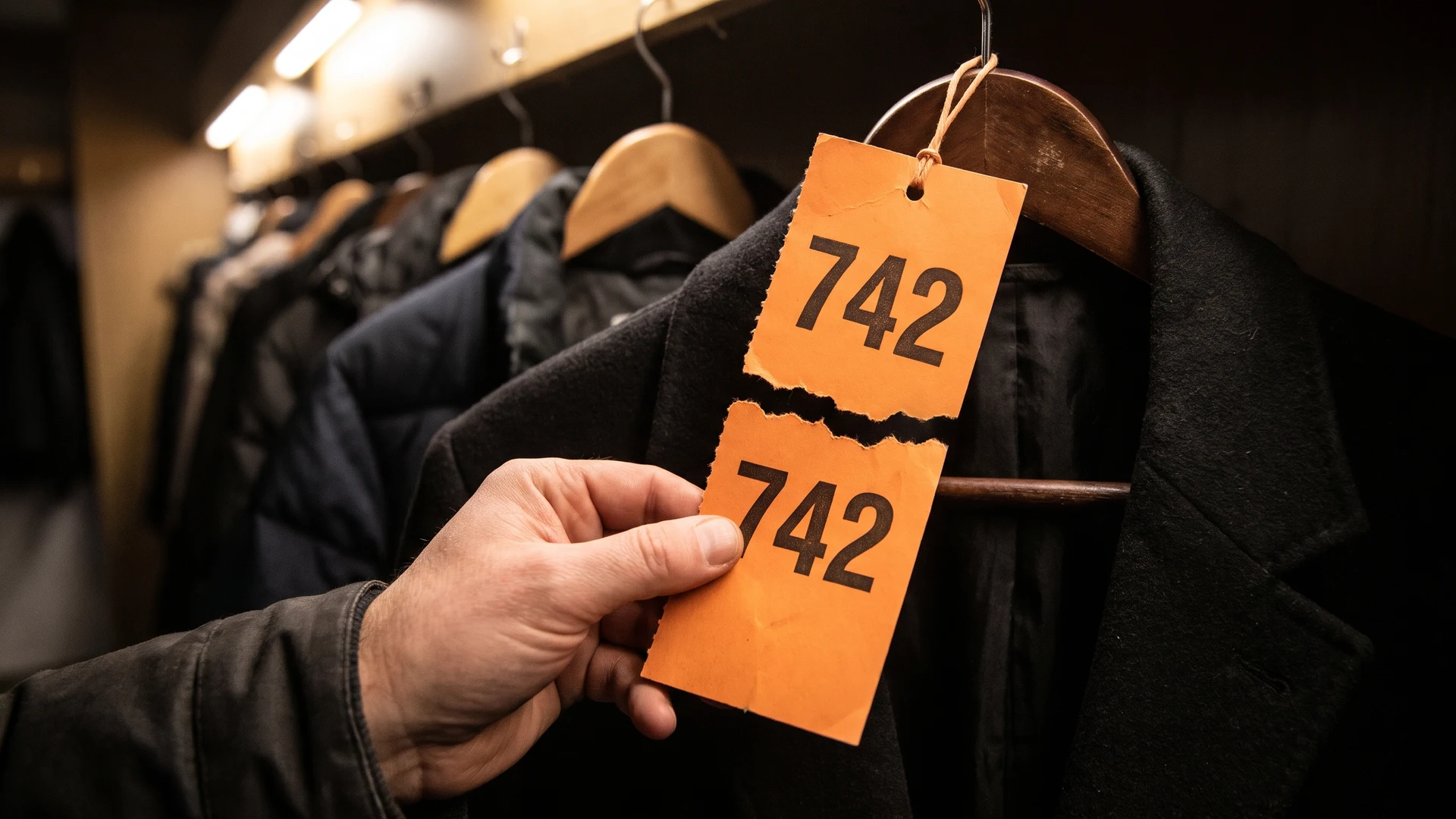
A reliable cloakroom system requires a layout that actively supports the fast and secure matching of stored items. A cloakroom ticket must feature two identical sections with the same clearly printed sequential number to verify ownership. One part of the ticket attaches easily to the coat or bag, while the guest retains the counterpart for later collection. Designing these two halves to separate cleanly ensures that your staff can tag items rapidly as a queue builds up.
When a guest returns to collect their belongings, the layout of the retained ticket determines how quickly staff can locate the item. Printing the number in a large, high-contrast font allows team members to read it from a distance as they scan the coat rails. The physical size of the guest ticket should be substantial enough that they do not easily lose it in a pocket or wallet. Building a cloakroom system around these practical design elements greatly reduces waiting times at the end of the night.
Retaining the correct stub for event reconciliation
The torn section of the ticket plays a crucial role in post-event tracking, auditing, and attendance counting. Once the doors close, your procurement leads and planners rely on those collected stubs to reconcile the number of guests against the capacity limits. The retained stub must hold the correct identifying data, such as the specific ticket type and sequential number, to make this administrative review accurate. Connecting the physical tearing action at the door to your final reconciliation ensures you always have a reliable paper trail for your records.
Testing the physical handling of your event tickets
Before finalising your printing order, you should physically test a sample ticket to evaluate how it performs under real conditions. Running a practical test of the tearing mechanics and reading speed with real team members quickly reveals any layout flaws. This hands-on evaluation allows you to adjust the placement of numbers or the strength of the perforation before you distribute thousands of copies. Taking the time to verify the physical handling guarantees that your final system is completely ready for real-world use.
How do I choose a perforation that tears cleanly in one motion?
Pick the perforation by balancing Teeth Per Inch and tie length. Teeth Per Inch, or TPI, counts the tiny cuts per inch. Ties are the uncut paper bridges between those cuts. Higher TPI with short ties tears easily, while lower TPI with longer ties resists.
Which tear line orientation works best at the door?
Choose vertical or horizontal based on hand motion and equipment. A horizontal tear on a portrait ticket snaps downward quickly. A vertical tear suits a landscape ticket held wide. Keep the barcode away from the perforation and align the perforation with the scanner feed direction.
Does paper grain direction really matter for stub removal?
Yes, grain direction strongly affects the tear. Paper grain is the direction most fibres run after manufacturing. A perforation parallel to the grain tears straight with little fluff. A perforation across the grain needs more force and can wander, so ask your printer to match the grain.
Where should numbering and wording sit after the tear?
Place essential details on the part you keep at the door. Do not run a gate, section, row, or seat field across the perforation. Duplicate the serial number on both parts. Leave a small clear margin beside the perforation to protect legibility and tearing.
What quick tests should we run with staff before finalising the layout?
Run a quick trial with real handling. Print a few samples, brief staff, and practise the pass, check, and snap in a short queue. Time the steps and note snags at the perforation or number placement. Adjust orientation, tie length, and stub size, then retest.