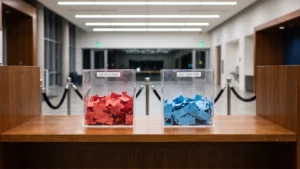

Preparing your post event ticket analysis
Conducting a post-event ticket analysis requires nothing more than the physical stubs you collected and a clear record of what you issued. You and your team can learn a great deal about visitor behaviour simply by reviewing the paper trails left at your admission gates and redemption counters. This basic evaluation process highlights which activities or items were most popular and reveals where you might need to adjust your approach for the next gathering. Gathering this information sets the stage for future improvements and proves that effective tracking relies on good physical processes rather than expensive technology.
Understanding issued and collected tickets
The foundation of your analysis depends on understanding the difference between issued tickets and collected tickets. Issued tickets refer to the physical rolls or sheets handed over to your guests when they arrive or make a purchase. You calculate this number by checking the starting and ending sequential numbers on the ticket rolls your staff used during the event. Knowing exactly how many units went into the hands of visitors gives you a firm baseline for all subsequent calculations.
Collected tickets are the stubs or whole coupons that your staff gather when guests redeem them for entry, food, or activities. You will find these collected items in your drop boxes, till drawers, or collection bags at each station. Comparing the total number of issued items against the physical stubs collected at redemption points tells you exactly how visitors interacted with your event. This straightforward comparison forms the core data you need to reconcile your daily operations and measure actual attendance or consumption.
How to calculate your ticket usage correctly
Calculating your exact ticket distribution requires a simple mathematical process based on the sequential numbers printed on your ticket rolls. When you record the numbers properly, you eliminate the need for your team to manually count hundreds of sold items. You can follow a clear sequence to determine your exact usage and avoid administrative headaches.
- Record the starting number: Before the event begins, write down the sequential number of the very first ticket on every roll you hand out to your staff. This step establishes your baseline for the day. Keeping a written log of these starting points prevents confusion when multiple staff members handle different rolls.
- Note the ending number: Once the event concludes, look at the next available ticket on the roll and record that exact number. You must use the number of the ticket still attached to the roll rather than the last one sold. This ensures your final calculation remains accurate and accounts for every single transaction.
- Calculate the difference: Subtract your starting number from the ending number to find the precise quantity of tickets issued to your visitors. This simple subtraction provides a foolproof total without requiring anyone to guess or estimate sales. You can apply this exact formula to admission rolls, cloakroom tags, and food coupons.
Evaluating food and drink bundle performance
Distinguishing between individual ticket sales and bundled coupon sheets gives you valuable insight into visitor purchasing habits. You can evaluate whether guests preferred buying their items in bulk or purchasing them singly as the day progressed. Tracking these distinct value categories helps you understand which options offer the most convenience to your attendees.
Tracking single ticket purchases
Single ticket purchases usually occur when visitors want a specific item, such as a single drink or a dedicated food portion. You can track these transactions easily by assigning a distinct ticket colour to individual purchases. When staff empty the collection boxes, counting these specific colours tells you exactly how many guests opted for isolated purchases rather than larger packages. This information helps you plan your staffing needs for quick, single-transaction service counters at future events.
Analysing bundled ticket sales
Bundled ticket sales often involve sheets or strips of coupons sold at a slight discount to encourage higher spending. You can monitor the success of these bundles by looking for sequential groupings in your collected stubs. If your team collects many coupons from the same sequential block at a food stand, it indicates that groups or families are heavily utilising the bundle offers. Understanding this usage allows you to tailor your bulk pricing to better match what your visitors actually consume.
Finding discrepancies in your physical ticket counts
You will often find that the number of sold tickets does not perfectly match the collected stubs at your redemption points. Acknowledging that missing stubs are a normal part of event operations helps you approach discrepancies calmly. Tracing these gaps allows you to identify whether the issue stems from guest behaviour or internal processes.
Accounting for unredeemed guest tickets
Guests frequently take physical coupons home as souvenirs or simply misplace them during a busy event. When your issued count is higher than your collected count, unredeemed tickets are usually the primary cause. You do not need to worry about these specific discrepancies, as unredeemed items represent revenue collected for goods you did not have to provide. Tracking the average number of lost tickets over several events helps you forecast your actual inventory needs more accurately.
Identifying staff handling inconsistencies
Discrepancies can also arise when staff members forget to collect a ticket during a rushed transaction or accidentally tear off too many coupons. You might notice these inconsistencies if certain collection boxes show significantly fewer stubs than the corresponding till records suggest. Providing clearer instructions or assigning different ticket colours to specific items can help your team manage transactions more accurately under pressure. Reviewing these handling errors gives you a clear focus for your next volunteer training session.
Adjusting your pricing strategy for next year
Connecting your analysed ticket data to your financial planning empowers you to make informed decisions for your next event. When you review exactly how many bundles or single tickets your visitors purchased, you can clearly see which price points resonated with your audience. If a particular high-value food ticket rarely reached the collection boxes, you might consider lowering its price or removing the option entirely. This evidence-based approach removes the guesswork from your operational planning and protects your budget.
You can also use this data to create better bundles that reflect actual visitor consumption patterns. If your physical ticket counts show that guests consistently bought three drink coupons at a time, you can introduce a new three-drink package next year. Adjusting your strategy based on hard numbers ensures that your pricing remains fair for attendees while covering your operational costs. Continuous refinement ultimately leads to smoother transactions and a more successful event.
A simple checklist for your event reconciliation
Securing accurate data requires your team to complete a clear sequence of tasks immediately after the venue closes. You can hand this actionable process directly to your staff as they begin to pack up the equipment. Following these steps ensures that no physical rolls or collection boxes go missing during the cleanup.
- Secure the remaining stock: Collect all unused ticket rolls from the admission gates and vendor stalls immediately. Store these rolls in a secure box to prevent accidental distribution after the event has officially ended. Documenting the final sequential numbers at this stage locks in your issued ticket data.
- Gather the collection boxes: Retrieve every drop box, till drawer, and collection bag from your redemption points. Keep the stubs from different stalls separated so you can accurately measure activity at each specific location. Label each bag with the stall name to make your later analysis much easier.
- Consolidate your written records: Collect the logs where your staff recorded their starting and ending sequential numbers. Place these sheets in a central folder alongside your physical ticket bags. Having all your documentation in one place allows you to start your reconciliation process without hunting for missing information.
Refining your ticket process over time
Building a historical record of your event pricing performance helps you refine your physical ticketing process over time. When you consistently document your ticket usage across multiple events, you develop a deep understanding of your audience and their preferences. You and your team can approach future planning with confidence, knowing that your decisions rely on solid, historical data. The educational resources at Coupon Tickets always encourage this long-term approach to ensure your ongoing operational ease and success.
How do I reconcile issued, collected, and leftover tickets?
Reconcile by counting what left stock, what came back, and what was legitimately removed. Calculate Issued by listing the number ranges you opened and subtracting unissued leftovers. Count Collected returns. Then compute Difference as Issued minus Collected minus logged voids, complimentary use, and spoilage.
Which calculations show if our pricing worked?
Useful metrics include redemption rate, sell-through, average tickets per guest, and realized price. Redemption rate equals collected divided by issued. Realized price equals revenue divided by redeemed items. Track by ticket type and bundle to spot where price felt high, low, or about right.
How should we treat complimentary, staff, and voided tickets in the numbers?
Track them separately so they do not distort price tests. Assign a marked range or record each number on a log. Subtract complimentary tickets and staff use from Issued before calculating revenue metrics. Keep voided and spoiled stubs, note the reason, and exclude them from redemption rate.
How can we compare bundles with single tickets after an event?
Compare realized price and uptake. For bundles, divide bundle revenue by the number of items actually redeemed to see the effective per-item price. Contrast that with the single ticket price and redemption rate. Note leftover bundle items, which signal breakage that inflated margin.
What should we do if number ranges are messy or mixed across books?
Treat each number range as its own mini audit. List the start and end used in each book, total unissued tickets, and count collected within that range. Flag gaps as unaccounted until explained by voids or complimentary tickets. Next year, assign ranges to stations and use sign-out sheets.